CanopyFind

Stump Grinding Guide for Northwest Georgia

Use this guide to understand how stump grinding works, typical depth and access considerations, market cost drivers, chip handling, and what to plan if you want to replant.

Describe the property conditions, access, and the outcome you want from stump grinding.

Ask for a written scope that explains what work and cleanup are included.

Start a stump grinding request

Choose the tree work that applies and tell us where the property is. You can add details in the next step.

Services Select all that apply

Submitting a service request does not book a job.

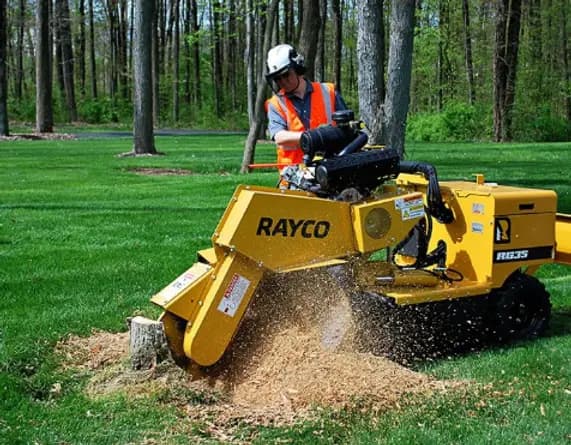
tree-service worker operating a stump grinder in a residential yard

When homeowners request stump grinding

A provider still needs to evaluate the tree and site. These are useful situations to describe in the initial service request.

  • 01

    A stump is blocking mowing, planting, or a planned project

  • 02

    Surface roots or the stump create a trip concern

  • 03

    A recent removal left a stump to address separately

  • 04

    The area needs a cleaner, more usable finish

Definition and scope

Stump grinding uses a purpose-built rotating disk grinder to chip a stump down below grade — typically 4 to 12 inches below the surrounding soil surface — leaving a chip pile that can be used as mulch, backfilled with soil, or hauled off. This is distinct from full stump removal, which excavates the stump and root ball entirely and is more expensive and disruptive. Stump grinding is the standard residential approach because it is faster, cheaper, and less destructive to surrounding soil and plantings.
Why grind a stump

A stump left in place is a tripping hazard, an obstacle to mowing and replanting, and a slow-decaying reservoir that attracts termites, carpenter ants, and other wood-boring pests. In humid Atlanta conditions, stumps can also sprout for years after the original tree was removed, requiring repeated cutting. In areas subject to city landscaping standards, subdivision covenants, or commercial landscape plans, leaving a stump may violate an approved plan.

Cost drivers in metro Atlanta

Key points for stump grinding include the following practical considerations.

  • Stump diameter measured at the widest point at ground level is the primary cost driver. The market convention across metro Atlanta and much of the country is $2 to $5 per inch of stump diameter.
  • Minimum service fee. Most providers have a minimum of $100 to $150 to cover travel and setup, meaning small stumps that would price under the minimum on a per-inch basis still charge the minimum.
  • Wood hardness. Hardwoods (oak, hickory, maple) are denser than softwoods (pine, sweetgum, tulip poplar) and wear grinder teeth faster.
  • Root system extent. Standard pricing typically covers the stump plus roots to 6 to 12 inches below the surface. Grinding surface roots that extend several feet from the stump costs extra.
  • Grinding depth. Deeper grinds, often needed for replanting a new tree in the same location, cost more.
  • Access. Backyards behind narrow gates may require a walk-behind grinder, which is slower than a truck-mounted unit.
  • Proximity to structures and utilities. Grinding near foundations, retaining walls, sprinkler systems, or underground utilities slows the work.

Typical metro Atlanta pricing

Most residential jobs run $100 to $400 per stump. A single average 12 to 18 inch stump typically runs $150 to $250. In the metro Atlanta market specifically, per-stump pricing typically falls between $120 and $210. Multiple-stump discounts are common when jobs are bundled.

What to expect during the job

Key points for stump grinding include the following practical considerations.

  • Assessment. The provider verifies stump size and access; some walk-behind machines require a 36-inch gate clearance.
  • Utility marks. For stumps near property lines or in front yards, calling 811 for a utility locate before grinding is often prudent.
  • Debris protection. The provider places tarps or shields to catch flying chips.
  • Grinding. Most residential stumps take 30 minutes to 2 hours.
  • Chip pile. The homeowner chooses to keep the chips as mulch (free, useful in beds) or pay to have them removed and the hole filled with soil.
  • Site walk. The provider confirms depth and clears debris.

After grinding — replanting the same spot

Fresh stump-grinding chips are high in carbon and low in nitrogen; as they decompose, they will temporarily tie up soil nitrogen. If replanting a new tree in the same location, the standard practice is to remove the chips and backfill with quality topsoil rather than plant directly into the chip pile. Even then, replanting immediately in the exact same spot as the original tree is not ideal — moving 6 to 10 feet to fresh soil produces better establishment.

Climate & Growing Conditions

Northwest Georgia spans both the northwest side of metropolitan Atlanta and the Ridge and Valley region.

Under the U.S. Department of Agriculture's 2023 Plant Hardiness Zone Map update, Cobb, Cherokee, and Bartow counties fall in Zones 8a–8b, meaning the average annual extreme minimum temperature runs between 10°F and 20°F. This is a half-zone warmer than the 2012 map, which placed much of the area in Zone 7b–8a. Floyd County (Rome) sits at the transition between the Piedmont and the Ridge and Valley region, generally Zone 7b–8a.

The regional climate is humid subtropical: hot summers, mild winters, and precipitation distributed through the year.

Common Trees Found on Residential Properties

Native and naturalized species commonly found on residential lots across northwest Georgia, according to University of Georgia Cooperative Extension resources, include:

  • Oaks: white oak, southern red oak, willow oak, water oak, black oak, chestnut oak
  • Pines: loblolly pine, shortleaf pine, Virginia pine, eastern white pine (at higher elevations)
  • Hickories: mockernut, pignut, shagbark
  • Other hardwoods: tulip poplar (yellow poplar), sweetgum, red maple, silver maple, black gum, American beech, sycamore, river birch, black walnut, pecan
  • Understory and flowering: dogwood, redbud, American holly, sourwood, southern magnolia, bigleaf magnolia
  • Cedars and evergreens: eastern red cedar; Leyland cypress (planted, not native)

Georgia Statewide Legal Baseline (Private-Property Removal)

Georgia does not have a statewide tree removal permit requirement for private residential property. Local municipalities and counties may enact their own tree protection ordinances, and many metro Atlanta jurisdictions have done so. Trees near sidewalks, curbs, or within the public right-of-way may require city approval regardless of the property's private ownership.

Under Georgia common law, if a healthy tree falls on a neighbor's property in a storm, the affected property owner's own insurance typically handles their own damage. The originating owner is generally not liable unless they knew or should have known the tree was hazardous and failed to act — which is one reason documenting concerns about a visibly declining neighbor's tree in writing can matter later.

Typical stump-grinding price ranges

These broad metro Atlanta market ranges can help you compare quotes. They are not CanopyFind pricing, and the provider’s written scope should define the actual job price.

Pricing basisTypical market range
Per inch of stump diameter$2–$5 per inch
Minimum service charge$100–$150
Typical residential job$100–$400
Typical metro Atlanta per-stump range$120–$210 per stump
tree-service worker operating a stump grinder on a lawn

A useful photo gives the service request more context

When it is safe to take one, include the tree, nearby structures, and the access around the work area. The provider can still confirm the final scope after evaluating the property.

Questions worth putting in writing

A clear scope makes it easier to understand whether different providers are proposing the same work.

  1. 1

    Describe the property conditions, access, and the outcome you want from stump grinding.

  2. 2

    Ask for a written scope that explains what work and cleanup are included.

  3. 3

    Confirm any local permit or utility coordination that applies to the property.

  4. 4

    Verify provider insurance and credentials directly before authorizing work.

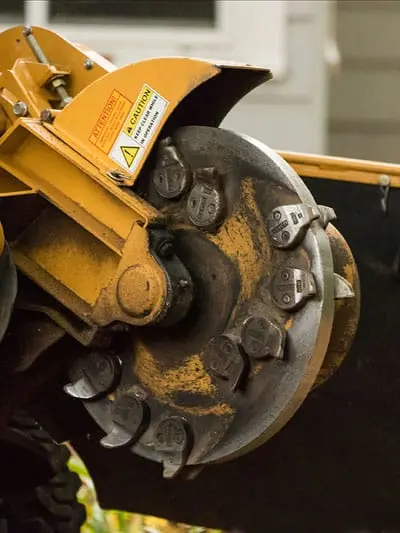
close-up of a stump grinder cutting wheel and teeth

Sources used on this page

Government, university, and public-agency references below support local rules, forestry guidance, storm history, and other factual context used on this page.

Stump grinding questions

How much does stump grinding cost in metro Atlanta?

The market convention is $2 to $5 per inch of stump diameter, with a $100 to $150 minimum service fee that covers travel and setup. Typical residential jobs run $100 to $400 per stump. In the metro Atlanta market specifically, per-stump pricing typically falls between $120 and $210.

What is the difference between stump grinding and stump removal?

Stump grinding chips the stump down below the surrounding soil surface (typically 4 to 12 inches deep), leaving a chip pile and the root system in place. Stump removal excavates the stump and the root ball entirely, and is more expensive and disruptive. Stump grinding is the standard residential approach.

How deep is a stump ground?

Standard grinding depth is 4 to 12 inches below the surrounding soil surface. Deeper grinds are available at higher cost and are typically requested when the homeowner intends to replant a new tree in the same location.

Can I plant a new tree in the exact spot the stump was ground?

It's not ideal. Fresh grinding chips are high in carbon and low in nitrogen and will temporarily tie up soil nitrogen as they decompose. If replanting is planned, the standard practice is to remove chips and backfill with quality topsoil. Even then, moving the new tree 6 to 10 feet away from the original stump gives it fresh soil and better establishment.

What happens to the chip pile after grinding?

The homeowner typically chooses whether to keep the chips — they make useful mulch for landscape beds — or pay to have them removed and the hole backfilled with soil. Removal and fill are additional costs.

How long does stump grinding take?

Most residential stumps take 30 minutes to 2 hours to grind, depending on size, wood hardness, root spread, and access. Multi-stump jobs are often bundled and discounted per stump.

Should I call 811 before stump grinding?

It's prudent, especially for stumps in front yards or near property lines. Standard grinding depth is shallow enough that most underground utilities are undisturbed, but proximity to shallow-buried gas, electrical, water, or communications lines makes a utility locate call worthwhile. You should also disclose any private utilities on your property (irrigation, well, propane, low-voltage lighting) to the grinder operator.

Are hardwood stumps more expensive to grind than softwood stumps?

Yes, incrementally. Hardwood stumps (oak, hickory, maple) are denser and wear grinder teeth faster than softwood stumps (pine, sweetgum, tulip poplar). Providers often price hardwoods at the higher end of the per-inch range.

Start a stump grinding request

Tell CanopyFind what you need, where the property is, and when you need help.

Start a service request