CanopyFind

Emergency Tree Service in Kennesaw, GA

For an emergency tree service request in Kennesaw, start with the local rule, the tree and site conditions, and the exact scope you want a provider to evaluate. The sections below combine Kennesaw-specific context with practical emergency tree service guidance.

Keep a safe distance from unstable trees and hanging limbs.

If a line may be energized, contact the utility or emergency services first.

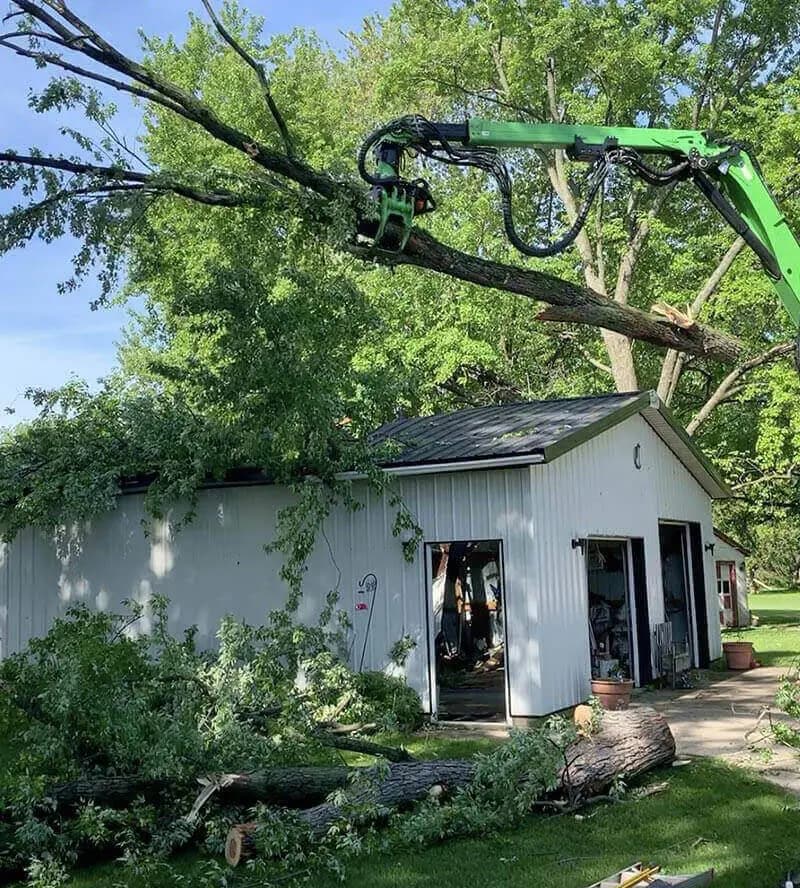
worker clearing heavy fallen tree branches after storm damage

Start your emergency tree service request

Choose the tree work that applies and tell us where the property is. You can add details in the next step.

Services Select all that apply

Submitting a service request does not book a job.

Emergency Tree Service in Kennesaw: local factors first

Kennesaw's normal tree-cutting permit requirement still matters after storms when the situation is no longer an immediate hazard, so post-event documentation and permit coordination should be part of the plan. Dense residential streets and the historic downtown place mature canopy close to structures, and the February 2014 ice storm caused widespread outages across Cobb County.

How to frame tree removal in Kennesaw

A residential removal in Kennesaw is more than cutting a trunk at ground level. The scope normally covers dismantling or felling the tree, processing brush and wood, and cleaning the work area; stump grinding is commonly a separate line item. Tight access or a canopy over structures can shift the method toward sectional rigging, bucket work, or crane support. Condition should drive the decision. Strong reasons for removal include advanced decline, serious trunk defects, substantial crown loss, root instability, an increasing lean toward a target, or an untreatable Emerald Ash Borer infestation in an ash.

How to frame emergency tree service in Kennesaw

A Kennesaw emergency request begins with the hazard, not with a normal maintenance schedule. Examples include a tree across the house or driveway, a large limb lodged overhead, or a newly leaning tree with root movement. The first phase may be limited to making the area safe; full removal and cleanup can follow once utilities, structural conditions, and insurance documentation are addressed. Do not approach a failed tree that is touching electrical service. Keep people clear, use emergency services for injury or structural danger, and contact the utility for downed or involved lines. After immediate hazards are controlled, take photographs from a safe location and open an insurance claim when a house, garage, fence, or other covered structure is damaged.

How to frame tree trimming & pruning in Kennesaw

Good pruning in Kennesaw is selective rather than indiscriminate. The objective may be crown cleaning, structural improvement, clearance, thinning, or a carefully planned reduction. Cuts should preserve natural form and branch attachments. Topping is specifically different: broad heading cuts stimulate weak shoots and expose large wounds, often increasing long-term maintenance and failure risk. Season matters when the work can be planned. Georgia's late-dormant period is generally favorable for major pruning of deciduous trees, while active hazard removal should not wait for the calendar. Oaks have a more specific precaution: avoid the roughly February-through-June period associated with oak-wilt vector activity when possible, and favor the deeper dormant months for planned oak pruning.

Definition and scope

Emergency tree service covers unplanned tree work triggered by a sudden hazard: a tree on a house or vehicle, a tree blocking a driveway or road, a large limb hung up in the canopy after a storm, a leaning tree with lifted roots after saturated soil, or any situation where waiting for a normal appointment leaves people or property at continued risk. Most metro Atlanta providers price emergency work at a 20% to 50% premium over standard removal because of after-hours labor, urgent dispatch, and increased safety risk.

Why emergency tree work exists as a category in this region

Metro Atlanta and northwest Georgia sit inside the southeastern severe-weather corridor sometimes called "Dixie Alley." The National Oceanic and Atmospheric Administration's Storm Events Database records 2,285 confirmed tornadoes in Georgia from 1950 through September 2025, with April as the peak month. Beyond tornadoes, straight-line thunderstorm winds, ice loading, saturated-soil uprooting, and lightning strikes all produce sudden tree failures.

The February 11–13, 2014 ice storm illustrates how a single event can generate simultaneous demand across the entire region. According to the University of Georgia Cooperative Extension, that storm damaged trees in more than 90 Georgia counties and left nearly one million utility customers without power. In September 2009, according to the Georgia Emergency Management Agency, 500-year floods produced widespread tree damage across metro Atlanta and prompted 23 federal disaster declarations.

Signs a tree may fail imminently (call before it happens)

Key points for emergency tree service include the following practical considerations.

  • A visible lean that has increased recently, especially with soil cracking or heaving at the root flare
  • Large hollow areas or extensive fungal fruiting bodies (conks, mushrooms) on the trunk or root flare
  • Major deadwood in the upper canopy, especially over structures or driving lanes
  • Cracked or split main leaders after wind events
  • Recent root disturbance (trenching, grade change, construction) near a large tree
  • Ash trees with confirmed Emerald Ash Borer symptoms — D-shaped exit holes, canopy dieback, and epicormic sprouts along the trunk. Per the Georgia Forestry Commission, these trees are especially prone to sudden failure once dead.

What to do immediately after a tree falls (safety first)

Key points for emergency tree service include the following practical considerations.

  • Stay clear of the tree and any downed lines. Assume every downed line is energized. Do not touch the tree if any part is in contact with a line.
  • Call 911 if there is injury, a gas leak, structural collapse, or a downed live line.
  • Contact the local electric utility for power lines. Tree providers generally will not begin work on a tree in contact with a live line until the utility has secured it.
  • Document with photos before anyone touches the tree — the earliest images are the most valuable for insurance.
  • Contact your insurance carrier to open a claim if there is structural damage.
  • Request a scoped emergency estimate from a qualified tree service.

Georgia Statewide Legal Baseline (Private-Property Removal)

Georgia does not have a statewide tree removal permit requirement for private residential property. Local municipalities and counties may enact their own tree protection ordinances, and many metro Atlanta jurisdictions have done so. Trees near sidewalks, curbs, or within the public right-of-way may require city approval regardless of the property's private ownership.

Under Georgia common law, if a healthy tree falls on a neighbor's property in a storm, the affected property owner's own insurance typically handles their own damage. The originating owner is generally not liable unless they knew or should have known the tree was hazardous and failed to act — which is one reason documenting concerns about a visibly declining neighbor's tree in writing can matter later.

What helps a provider assess the service request

This page combines the service and location without pretending to know the property. Add real site details in the service request flow.

01

A tree or large limb has fallen on a structure or access route

02

A damaged tree is shifting or at risk of falling

03

Storm damage has left hanging or broken limbs

04

Tree damage is creating an immediate safety concern

Use the property—not generic local claims

CanopyFind does not publish an assumed provider price, availability window, or credential for Kennesaw. Property-specific details should be confirmed for the actual job.

Read the complete emergency service guide

Before you compare options

  • Keep a safe distance from unstable trees and hanging limbs.
  • If a line may be energized, contact the utility or emergency services first.
  • Use photos only when they can be taken from a safe location.
worker cutting a storm-damaged tree near a home

Related CanopyFind guides

Use the parent location and service guides for broader context, compare a related service in this city, or compare the same service in another approved launch market.

Sources used on this page

Government, university, and public-agency references below support local rules, forestry guidance, storm history, and other factual context used on this page.

Emergency service questions

What counts as a tree emergency?

Any situation where a tree, limb, or unstable root plate creates continued risk to people, structures, vehicles, or utilities. Common triggers include a tree on a house or vehicle, a tree blocking a driveway or road, a large hanging limb after a storm, or a mature tree that has begun leaning after saturated soil.

What should I do first if a tree falls on my house?

Stay clear of the tree and any downed lines. Call 911 if there is injury, a gas leak, or a downed live line. Contact your utility for line involvement. Document with photos before anyone touches the tree. Contact your insurance carrier to open a claim. Then request a scoped emergency estimate from a qualified tree service.

Are downed power lines always dangerous?

Assume every downed line is energized. Do not touch or move any tree that is in contact with a line. Wait for the utility to secure the line before any tree work begins. Reputable tree services will not begin cutting on a line-adjacent tree until the utility has cleared it.

How much extra does emergency tree service cost compared to a scheduled removal?

Emergency tree service in metro Atlanta typically runs 20% to 50% above standard removal rates, reflecting after-hours labor, urgent dispatch, and increased safety risk.

Do I need a permit to remove a tree in Kennesaw?

Yes. The City of Kennesaw requires a tree cutting permit for residential tree removal. The permit fee is $25.00, submitted to the Kennesaw Public Works Department at 3080 Moon Station Road.

What extra requirements apply in Kennesaw's Historic District?

Properties in the Kennesaw Historic District require Historic Preservation Commission approval and an additional $50 Certificate of Appropriateness fee, for a total of $75 in permit fees.

How long is a Kennesaw tree cutting permit valid?

Six months from the date of issuance. Do not begin cutting until the permit has been issued.

Who is responsible for cleanup after tree removal in Kennesaw?

The property owner. The permit terms specify that the owner handles all cleanup and debris removal, and that the work must minimize impact on city streets and not interfere with garbage pickup.

Start your emergency tree service request in Kennesaw

Tell CanopyFind what you need, where the property is, and when you need help.

Start a service request