CanopyFind

Stump Grinding in Woodstock, GA

For a stump grinding request in Woodstock, start with the local rule, the tree and site conditions, and the exact scope you want a provider to evaluate. The sections below combine Woodstock-specific context with practical stump grinding guidance.

Share the stump width and a photo with surrounding access visible.

Mention gates, slopes, hardscape, and known underground utilities.

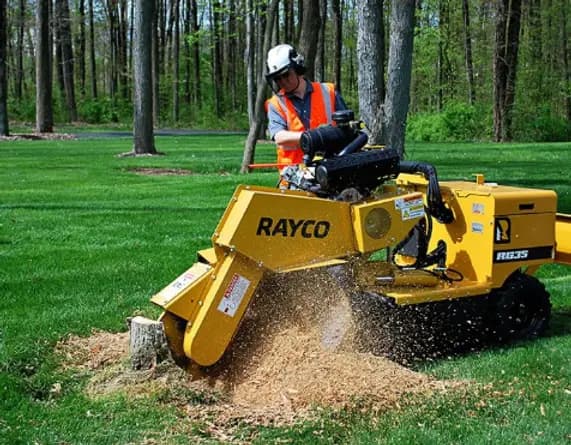
tree-service worker operating a stump grinder in a residential yard

Start your stump grinding request

Choose the tree work that applies and tell us where the property is. You can add details in the next step.

Services Select all that apply

Submitting a service request does not book a job.

Stump Grinding in Woodstock: local factors first

A separate Woodstock permit is not typically required for stump grinding after an approved removal, although an unpermitted removal can still create enforcement issues. Hardwood stumps such as oak and hickory require more grinding effort than many softwoods, and replanting plans should account for grinding debris and the need for suitable soil.
Regional forestry note

The Georgia Forestry Commission published an Urban Tree Canopy Assessment for the City of Woodstock in March 2024. Key strategies for Woodstock include ensuring tree preservation is included in the city's resiliency plan, auditing tree codes and ordinances, training city employees on tree care certification, promoting "Right Tree, Right Place" educational programs, and formally codifying the city's tree board.

Local tree canopy character

Woodstock sits at the transition between the Piedmont and the southern foothills of the Blue Ridge. Older Woodstock neighborhoods contain mature oaks (white, southern red, water, chestnut), hickories, tulip poplars, sweetgum, and pines. Newer subdivisions frequently include Bradford pears and other flowering ornamentals planted at build time. Cherokee County's suburbanization has been rapid, meaning many properties still have residual forest trees that predate the neighborhood.

Local pest and disease pressure

The Georgia Forestry Commission's statewide Emerald Ash Borer quarantine applies. Southern Pine Beetle risk exists in loblolly-pine-dominated neighborhoods, especially during drought years.

Definition and scope

Stump grinding uses a purpose-built rotating disk grinder to chip a stump down below grade — typically 4 to 12 inches below the surrounding soil surface — leaving a chip pile that can be used as mulch, backfilled with soil, or hauled off. This is distinct from full stump removal, which excavates the stump and root ball entirely and is more expensive and disruptive. Stump grinding is the standard residential approach because it is faster, cheaper, and less destructive to surrounding soil and plantings.

Climate & Growing Conditions

Northwest Georgia spans both the northwest side of metropolitan Atlanta and the Ridge and Valley region.

Under the U.S. Department of Agriculture's 2023 Plant Hardiness Zone Map update, Cobb, Cherokee, and Bartow counties fall in Zones 8a–8b, meaning the average annual extreme minimum temperature runs between 10°F and 20°F. This is a half-zone warmer than the 2012 map, which placed much of the area in Zone 7b–8a. Floyd County (Rome) sits at the transition between the Piedmont and the Ridge and Valley region, generally Zone 7b–8a.

The regional climate is humid subtropical: hot summers, mild winters, and precipitation distributed through the year.

Common Trees Found on Residential Properties

Native and naturalized species commonly found on residential lots across northwest Georgia, according to University of Georgia Cooperative Extension resources, include:

  • Oaks: white oak, southern red oak, willow oak, water oak, black oak, chestnut oak
  • Pines: loblolly pine, shortleaf pine, Virginia pine, eastern white pine (at higher elevations)
  • Hickories: mockernut, pignut, shagbark
  • Other hardwoods: tulip poplar (yellow poplar), sweetgum, red maple, silver maple, black gum, American beech, sycamore, river birch, black walnut, pecan
  • Understory and flowering: dogwood, redbud, American holly, sourwood, southern magnolia, bigleaf magnolia
  • Cedars and evergreens: eastern red cedar; Leyland cypress (planted, not native)

Georgia Statewide Legal Baseline (Private-Property Removal)

Georgia does not have a statewide tree removal permit requirement for private residential property. Local municipalities and counties may enact their own tree protection ordinances, and many metro Atlanta jurisdictions have done so. Trees near sidewalks, curbs, or within the public right-of-way may require city approval regardless of the property's private ownership.

Under Georgia common law, if a healthy tree falls on a neighbor's property in a storm, the affected property owner's own insurance typically handles their own damage. The originating owner is generally not liable unless they knew or should have known the tree was hazardous and failed to act — which is one reason documenting concerns about a visibly declining neighbor's tree in writing can matter later.

Typical stump-grinding price ranges

These broad metro Atlanta market ranges can help you compare quotes. They are not CanopyFind pricing, and the provider’s written scope should define the actual job price.

Pricing basisTypical market range
Per inch of stump diameter$2–$5 per inch
Minimum service charge$100–$150
Typical residential job$100–$400
Typical metro Atlanta per-stump range$120–$210 per stump

What helps a provider assess the service request

This page combines the service and location without pretending to know the property. Add real site details in the service request flow.

01

A stump is blocking mowing, planting, or a planned project

02

Surface roots or the stump create a trip concern

03

A recent removal left a stump to address separately

04

The area needs a cleaner, more usable finish

Use the property—not generic local claims

CanopyFind does not publish an assumed provider price, availability window, or credential for Woodstock. Property-specific details should be confirmed for the actual job.

Read the complete stump grinding guide

Before you compare options

  • Share the stump width and a photo with surrounding access visible.
  • Mention gates, slopes, hardscape, and known underground utilities.
  • Ask how grindings, backfill, and surface cleanup will be handled.
tree-service worker operating a stump grinder on a lawn

Related CanopyFind guides

Use the parent location and service guides for broader context, compare a related service in this city, or compare the same service in another approved launch market.

Sources used on this page

Government, university, and public-agency references below support local rules, forestry guidance, storm history, and other factual context used on this page.

Stump grinding questions

How much does stump grinding cost in metro Atlanta?

The market convention is $2 to $5 per inch of stump diameter, with a $100 to $150 minimum service fee that covers travel and setup. Typical residential jobs run $100 to $400 per stump. In the metro Atlanta market specifically, per-stump pricing typically falls between $120 and $210.

What is the difference between stump grinding and stump removal?

Stump grinding chips the stump down below the surrounding soil surface (typically 4 to 12 inches deep), leaving a chip pile and the root system in place. Stump removal excavates the stump and the root ball entirely, and is more expensive and disruptive. Stump grinding is the standard residential approach.

How deep is a stump ground?

Standard grinding depth is 4 to 12 inches below the surrounding soil surface. Deeper grinds are available at higher cost and are typically requested when the homeowner intends to replant a new tree in the same location.

Can I plant a new tree in the exact spot the stump was ground?

It's not ideal. Fresh grinding chips are high in carbon and low in nitrogen and will temporarily tie up soil nitrogen as they decompose. If replanting is planned, the standard practice is to remove chips and backfill with quality topsoil. Even then, moving the new tree 6 to 10 feet away from the original stump gives it fresh soil and better establishment.

Does Woodstock require a permit to remove a tree?

Yes, for any tree three inches diameter at breast height or greater within the City of Woodstock. Diameter at breast height is measured 4.5 feet above the ground. The permit is free, but it is capped at five non-specimen trees per residential lot per calendar year. Even dead or dying trees require an approved permit.

What are the penalties for removing a tree in Woodstock without a permit?

Fines are paid to the Tree Preservation Fund based on the Land Development Code fee schedule. Violations are misdemeanors, and convictions may carry fines up to $1,000 per offense or up to six months imprisonment. Each day of continued violation may be considered a separate offense.

What qualifies as a specimen tree in Woodstock?

Specimen tree criteria depend on species. Tulip poplar, sweet gum, river birch, silver maple, or pine at 30 inches diameter at breast height or greater; ash, beech, blackgum, cedar, cypress, hickory, magnolia (excluding bigleaf), maple (excluding silver), pecan, persimmon, redwood, sourwood, sycamore, or walnut at 24 inches diameter at breast height or greater; American holly, dogwood, redbud, or bigleaf magnolia at criteria determined by the city arborist.

Is there a Woodstock urban tree canopy plan?

Yes. The Georgia Forestry Commission published an Urban Tree Canopy Assessment for the City of Woodstock in March 2024, identifying strategies for tree preservation, code audits, staff training, "Right Tree, Right Place" public education, and formalizing the city's tree board.

Start your stump grinding request in Woodstock

Tell CanopyFind what you need, where the property is, and when you need help.

Start a service request