CanopyFind

Tree Trimming & Pruning in Marietta, GA

For a tree trimming & pruning request in Marietta, start with the local rule, the tree and site conditions, and the exact scope you want a provider to evaluate. The sections below combine Marietta-specific context with practical tree trimming & pruning guidance.

Explain the outcome you want rather than asking for an arbitrary amount removed.

Ask how the proposed cuts support the tree’s structure and health.

arborist climbing a ladder to prune a mature tree in a residential yard

Start your tree trimming & pruning request

Choose the tree work that applies and tell us where the property is. You can add details in the next step.

Services Select all that apply

Submitting a service request does not book a job.

Tree Trimming & Pruning in Marietta: local factors first

Routine pruning on private single-family property in Marietta does not require a city permit. Structural pruning is relevant both to young hardwoods and mature trees near established neighborhoods, and deep-dormancy pruning for oaks, roughly November through January, can reduce oak-wilt vector risk.
Local pest and disease pressure

According to the Georgia Forestry Commission, Emerald Ash Borer has been confirmed in Cobb County since 2014, and Georgia has been under a statewide Emerald Ash Borer quarantine since December 2017. Southern Pine Beetle risk is elevated for pine-dominated properties, especially during drought years. Bradford pear splitting is a chronic seasonal issue for Marietta properties planted with these ornamentals in the 1980s and 1990s.

Storm exposure

Marietta shares the general metro Atlanta storm profile — thunderstorm winds, occasional tornadoes (April peak), and periodic ice storms. The February 2014 ice storm affected the entire metro. The November 30, 2010 storm system, according to the National Weather Service office in Peachtree City, produced tree and power-line damage across neighboring counties, illustrating how frequent straight-line wind events are in this corridor.

University of Georgia Cooperative Extension resource

Cobb County Extension Office serves Marietta and provides free consultation on invasive pests and general tree care questions via the Georgia Forestry Commission's "Ask the Arborist" service.

Definition and scope

"Tree trimming" and "tree pruning" are often used interchangeably in everyday conversation. In arboriculture, "pruning" refers more strictly to structural or health-driven cuts guided by the American National Standards Institute A300 tree care standard, and "trimming" often refers to aesthetic or clearance work. Both should be performed with clean, properly targeted cuts. Neither should ever involve "topping" — indiscriminate heading cuts to shorten a tree. Topping is broadly recognized as the most harmful common pruning practice; it produces weakly attached regrowth and long-term decay, and typically increases rather than decreases long-term failure risk.

Best timing for the region

For most deciduous trees in Georgia, the late-dormant season — approximately late November through February, with February often considered the sweet spot — is the preferred pruning window. Dormant-season pruning offers three advantages: branch structure is visible without foliage; fungal and insect pressure on fresh wounds is lower in cold conditions; and the tree can direct its spring energy surge into vigorous wound closure.

Oaks carry a particularly important timing rule: avoid pruning oaks from roughly February through June to reduce the risk of transmitting oak wilt through beetle vectors that are active in that window. Deep dormancy (November through January) is the safest window for oaks.

Exceptions to the dormant-season rule

Key points for tree trimming & pruning include the following practical considerations.

  • Hazard removal is time-independent. Broken, cracked, dead, or diseased limbs that pose a risk should be removed as soon as they are identified, regardless of season.
  • Spring-flowering ornamentals (dogwoods, redbuds) are typically pruned just after they finish flowering, to preserve the next year's bloom.
  • Summer light pruning for small deadwood or clearance is acceptable, but major structural cuts should generally wait for dormancy.

Common pruning objectives and techniques

Key points for tree trimming & pruning include the following practical considerations.

  • Crown cleaning: removal of dead, diseased, broken, and weakly attached branches
  • Crown thinning: selective removal to reduce density and wind sail without changing overall size
  • Crown raising: removal of lower limbs to provide clearance over walkways, driveways, or structures
  • Crown reduction: selective cuts back to lateral branches to reduce overall height or spread while preserving natural form (the correct alternative to topping)
  • Structural pruning: cuts on young or middle-aged trees to establish a strong single leader and well-spaced scaffold branches, dramatically reducing the risk of storm failure decades later
  • Vista pruning: selective thinning to open a specific sightline
  • Utility clearance: performed by, or coordinated with, the electric utility for lines

What good pruning looks like

Cuts are made just outside the branch collar — not flush with the trunk and not leaving stubs. Typically no more than 25% of live canopy is removed in a single season on mature trees. According to the Georgia Forestry Commission, climbing spikes should never be used on trees being pruned; they are appropriate only for trees being removed, because the puncture wounds create long-term decay pathways. Wound dressings are generally not recommended except in specific oak wilt vector windows.

What a useful pruning scope should describe

A clear pruning estimate should say what the work is intended to accomplish. Common objectives include removing dead or broken branches, improving branch structure, creating clearance from a roof or drive, selectively reducing canopy density, or shortening specific leaders while maintaining the tree’s natural form. That is different from topping, which uses indiscriminate heading cuts to reduce height and is associated with weak regrowth and long-term decay. On mature Marietta trees, the scope should also make clear whether large live limbs are being removed and why. The homeowner can then compare proposals on the actual pruning objective instead of comparing only the number of cuts or the amount of material removed.

What helps a provider assess the service request

This page combines the service and location without pretending to know the property. Add real site details in the service request flow.

01

Dead or damaged limbs are present

02

Branches are too close to a roof, driveway, or other structure

03

A young tree needs structural guidance

04

Dense growth is creating a specific clearance concern

Use the property—not generic local claims

CanopyFind does not publish an assumed provider price, availability window, or credential for Marietta. Property-specific details should be confirmed for the actual job.

Read the complete trimming & pruning guide

Before you compare options

  • Explain the outcome you want rather than asking for an arbitrary amount removed.
  • Ask how the proposed cuts support the tree’s structure and health.
  • Confirm how debris and cleanup will be handled.
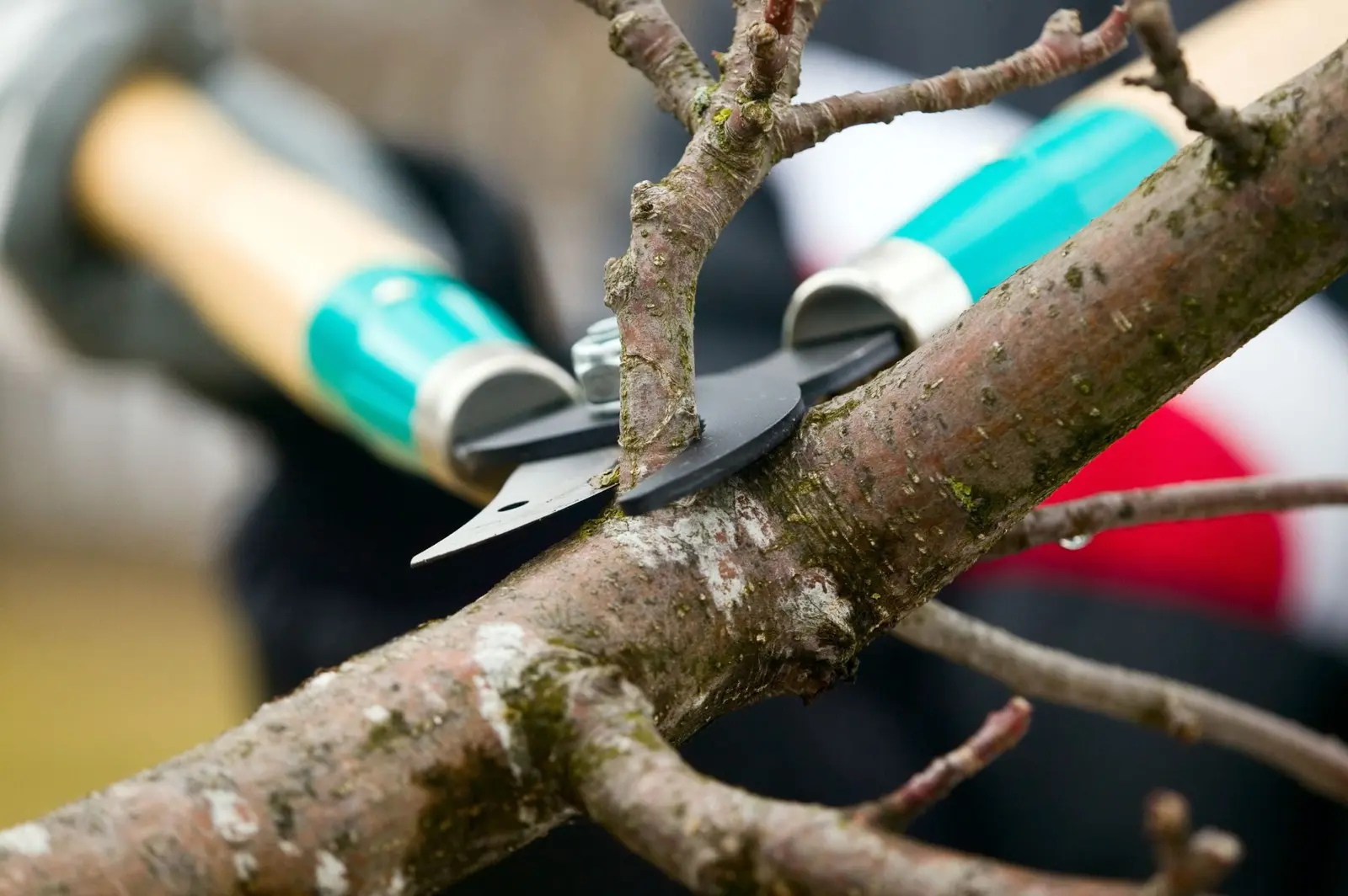
hand pruning a small tree branch with bypass shears

Sources used on this page

Government, university, and public-agency references below support local rules, forestry guidance, storm history, and other factual context used on this page.

Trimming & pruning questions

When is the best time to prune trees in Georgia?

For most deciduous trees, the late-dormant season — approximately late November through February — is the preferred window. February is often considered the sweet spot: branch structure is visible, disease and insect pressure is low, and the tree's spring energy surge drives vigorous wound closure.

When should I NOT prune an oak tree in Georgia?

Avoid pruning oaks from approximately February through June to reduce the risk of transmitting oak wilt through beetle vectors that are active in that window. Deep dormancy — November through January — is the safest time to prune oaks.

Is topping a tree a good way to reduce its size?

No. Topping — indiscriminate heading cuts to shorten a tree — is broadly recognized as the most harmful common pruning practice. It produces weakly attached regrowth and long-term decay, and typically increases rather than decreases long-term failure risk. Proper crown reduction by a certified arborist uses selective cuts back to lateral branches to preserve the tree's natural form.

How often should I prune a mature tree?

Cycles of roughly every two to five years are typical for mature residential trees, depending on species, growth rate, and objectives. Younger trees benefit from more frequent structural pruning in their first 15 years.

Do I need a permit to remove a tree on my Marietta property?

For a single-family residential lot, no city permit is generally required. Commercial and multi-family properties do require permits from the Marietta Department of Development Services.

Who do I contact about tree removal on City of Marietta property?

The Marietta Streets Department manages public trees. If a City tree has fallen onto private property, the City is responsible only for the portion up to the property line unless it had previously been documented as a hazard.

What is the Cobb County tree ordinance and does it apply to me?

Cobb County's Tree Protection Ordinance applies primarily in unincorporated Cobb — properties inside a municipality (Marietta, Kennesaw, Acworth) are governed by the city ordinance, not the county's. Contact Cobb Community Development at (770) 218-0068 for unincorporated Cobb questions.

Is Emerald Ash Borer confirmed in Marietta?

According to the Georgia Forestry Commission, Emerald Ash Borer was confirmed in Cobb County in 2014 as part of the statewide trapping program, and Georgia has been under a statewide Emerald Ash Borer quarantine since December 2017. Ash trees showing D-shaped exit holes or canopy dieback are candidates for removal.

Start your tree trimming & pruning request in Marietta

Tell CanopyFind what you need, where the property is, and when you need help.

Start a service request